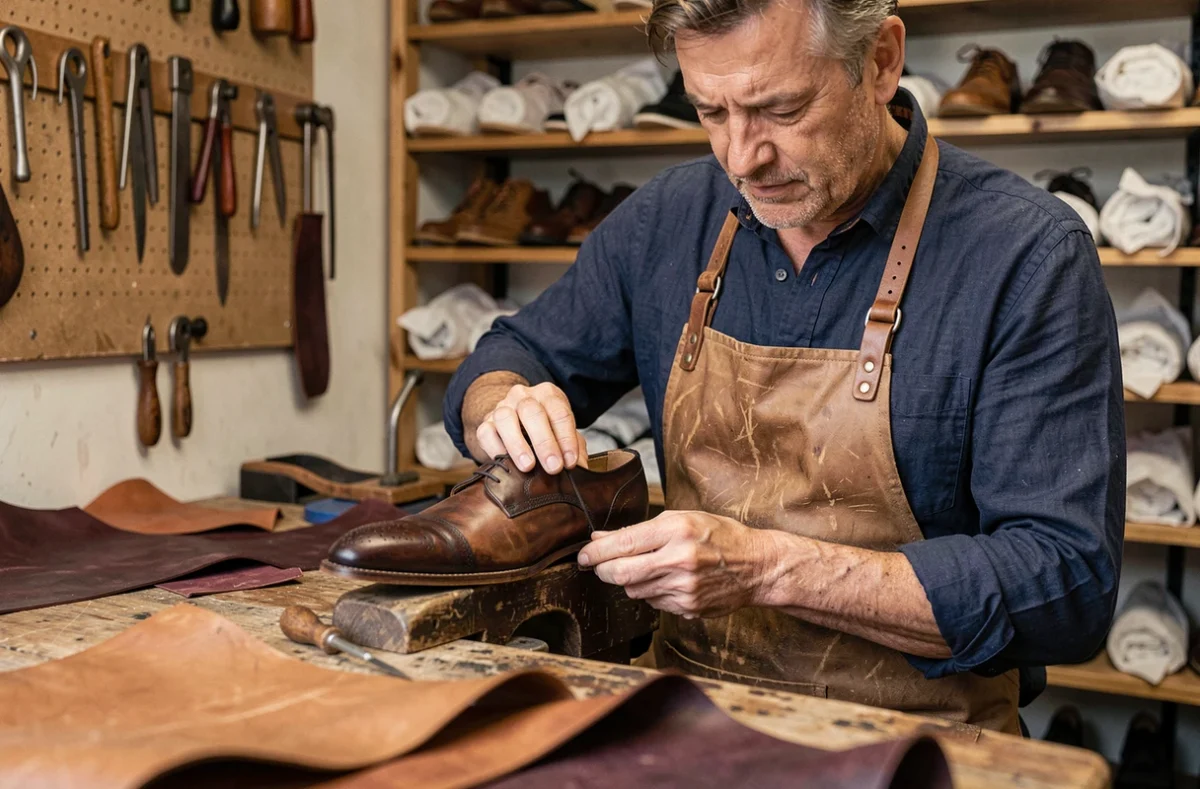
When looking for a pair of leather shoes that can last for several years without deforming, the first instinct is often to check the origin of manufacture. In France, the artisanal sector relies on precise assembly techniques, a choice of traceable materials, and a finishing requirement that directly affects the product’s longevity.
French artisanal shoes are not just a label. They involve a manufacturing process where each manual operation impacts comfort and durability.
Goodyear welt and Norwegian welt: what it changes in wear
On the ground, the difference between a glued shoe and a stitched shoe is felt within the first few weeks. The Goodyear welt attaches the outsole to a welt with a double stitch. The concrete result: the shoe can be resoled multiple times, significantly extending its lifespan compared to a glued model.
The Norwegian welt, on the other hand, folds the leather of the upper outward before stitching. This technique produces a visible roll that enhances waterproofing. This assembly can be found on models designed for demanding daily use, particularly derbies and winter boots.
Each technique requires more than one hundred and fifty manual operations. It is this accumulation of gestures, from pattern making to shaping on the wooden last, that distinguishes an artisanal workshop from an industrial production line. Brands like grainedeshoes.com help identify models made according to these methods, in full-grain leather, with traceability of material origins.
Full-grain leather vs corrected leather: spotting quality before purchase
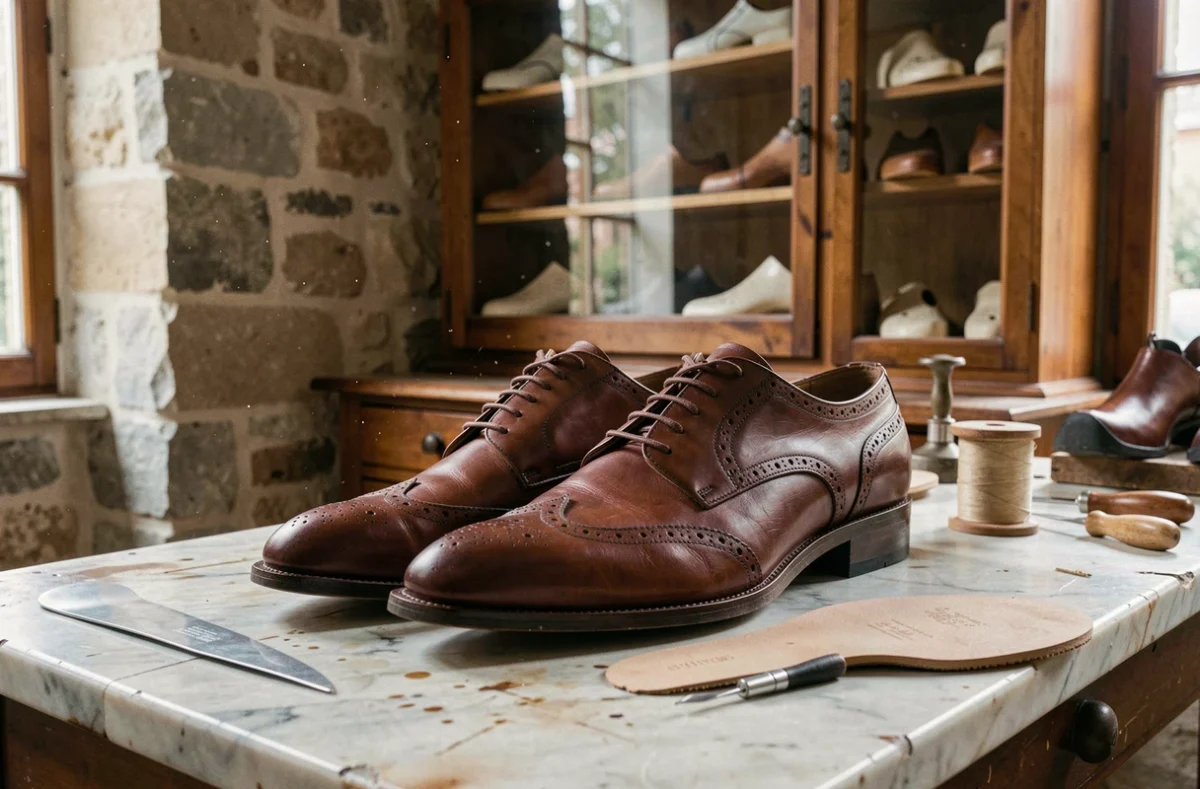
The leather used determines both the fit of the shoe and its comfort. Full-grain leather retains the original surface of the hide, with its natural grain. It develops a patina over time instead of peeling, and it breathes better than leather whose surface has been sanded and then covered with a film.
Corrected leather, on the contrary, masks imperfections with a surface treatment. It appears uniform in stores, but it ages poorly and loses its suppleness more quickly. To recognize it, observe the grain: leather that is too smooth and perfectly regular has often been corrected.
In French artisanal workshops, the choice of leather involves selection at the tannery. Hides generally come from certified European tanneries, ensuring a vegetable or mineral tanning process compliant with environmental standards. This level of traceability remains rare for mass-produced models.
French artisanal shoes for men and women: models that last
French artisanal collections cover a broader spectrum than one might think. They include loafers, derbies, ankle boots, sandals, and even sneakers mounted on stitched soles. The variety of models for men and women allows for both formal and casual styles.
Here are the concrete criteria to check before buying:
- Is the sole stitched or glued? A visible stitch around the sole indicates a durable assembly, resolable by a cobbler.
- Is the leather full-grain? Run your finger over the surface: an irregular, slightly textured grain indicates an uncorrected hide.
- Is the inner lining made of leather? A leather lining absorbs moisture and limits friction, reducing foot fatigue over a full day.
- Does the brand communicate about the place of manufacture and the origin of materials? An identifiable artisanal workshop in France is a reliable indicator.
Loafers and derbies: two classics to distinguish
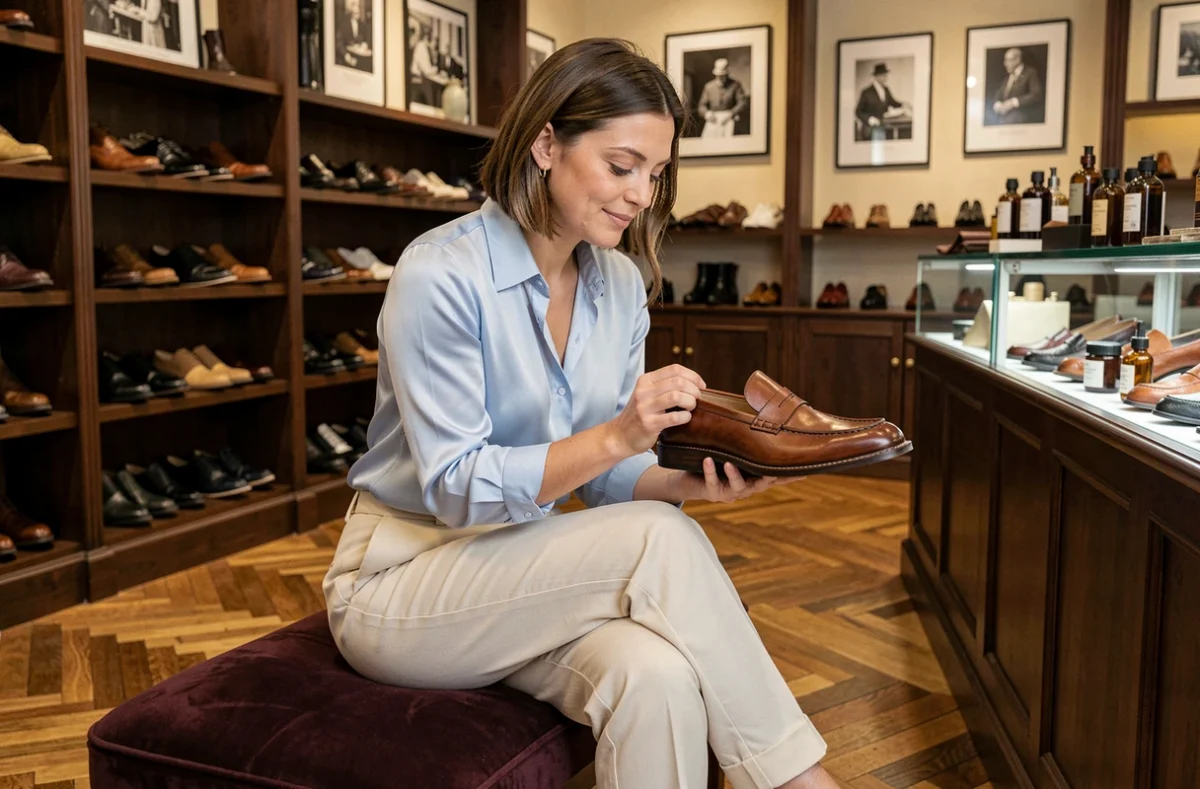
The loafer is characterized by the absence of lacing and a soft construction that hugs the foot. In its artisanal version, it is often Blake stitched (a through-stitch under the sole), making it lighter but less resolable than a Goodyear.
The derby, with its open quarters laced on top, offers better adaptability to the foot’s volume. It is the most versatile model of dress shoe, suitable for both men and women. A full-grain leather derby stitched Goodyear remains a worthwhile investment over five to ten years.
Regulations and end of life: what changes for shoes in France
The purchase of an artisanal shoe does not stop at manufacturing. Since 2009, brands selling shoes in France fund the collection and recovery of end-of-life products, through the Refashion sector. This extended producer responsibility (EPR) applies to both large brands and small workshops.
The regulatory framework is evolving rapidly. The European regulation on the eco-design of durable products, which came into effect on July 18, 2024, prepares for the arrival of requirements regarding lifespan, reparability, and material traceability. A future digital product passport could document the entire lifecycle of a shoe, from the tannery to recycling.
Another concrete point: starting July 19, 2026, the destruction of unsold shoes will be prohibited for large companies. Medium-sized enterprises will be affected starting in 2030. For an artisanal workshop that produces in small series, this constraint weighs less, but it illustrates the direction taken by European regulation.
The label “made in France” and its limits
A point on which feedback varies: the label “made in France” does not guarantee that all operations were carried out on the territory. It indicates that the last substantial transformation took place in France. To ensure a truly artisanal product, check if the manufacturing workshop is identified, if the cutting, stitching, and assembly steps are done in the same place, and if the brand communicates about its leather suppliers.
French artisanal shoes stand out by the sum of their technical details, not by a single label. It is the combination of stitched assembly, leather selected at the tannery, and the know-how of a localized workshop that produces a durable result. Checking these elements before purchase remains the most reliable way to make an informed choice.