
Hair slicked down on the third day, a feeling of heaviness by the second morning, or on the contrary, a still fresh scalp after five days without shampoo: the differences from one person to another are considerable. The answer to the question “how many days to keep hair without washing” depends less on a universal rule than on the nature of the scalp, hair texture, and daily lifestyle.
Sebum and Scalp: What Really Decides Washing Frequency
The sebum produced by the sebaceous glands of the scalp is a protective film. Its role is to maintain hydration and protect the hair fiber. The problem arises when this production exceeds what the hair can absorb.
On fine, straight hair, sebum quickly glides from the roots to the tips. The result: greasy appearance often appears as early as the second day. On thick, curly, or coily hair, sebum moves down much more slowly, sometimes over several days. This explains why the texture of the hair radically alters the necessary washing frequency.
Clinical trials published in the Journal of Cosmetic Dermatology in 2022 confirm that a weekly or bi-weekly washing routine on textured hair does not compromise scalp hygiene or health, provided that gentle cleansing and leave-in treatments are used. We are far from the “norm” of two to three days often repeated online, and finding hair care tips on Annuaire Beauté helps better understand this variability according to one’s own hair type.

Greasy Hair After Two Days: Is It Really Necessary to Wash Again Immediately?
When hair gets greasy quickly, the reflex to shampoo daily seems logical. Dermatologists have nuanced this reflex for several years. Several dermatological societies in Europe and North America have agreed since 2022-2024 on one point: daily washing is generally not necessary, except in cases of pathology (seborrheic dermatitis, psoriasis) or specific constraints (intensive daily sports, dirty jobs).
A scalp that gets greasy quickly after reducing washing often goes through a phase of overproduction of sebum. Adaptation is frequently observed within a few weeks, provided one does not alternate between daily washing and sudden spacing. The transition works better when one pushes back by one day at a time.
Signs That Justify Washing Sooner Than Expected
Spacing out shampoos does not mean ignoring the signals from the scalp. Certain situations require washing without delay:
- Persistent itching accompanied by redness or irritation, which may indicate a buildup of residues or an inflammatory reaction.
- Notable odor even after brushing, a sign that bacteria on the scalp are developing beyond a comfortable threshold.
- Prolonged exposure to dust, pollution, or excessive sweating (hiking, construction site, heatwave).
Outside of these cases, a scalp that simply feels “not fresh” to the touch does not necessarily require a full shampoo.
Scalp Microbiome: An Argument for Spacing Washes
A review published in Skin Appendage Disorders in 2023 shows that spacing shampoos beyond two to three days increases the diversity of the scalp microbiome. This microbial diversity seems to improve skin resilience in some individuals.
The link is not automatic. Feedback varies on this point depending on individual scalp sensitivity. A person prone to seborrheic dermatitis will not benefit the same way as someone with a healthy scalp. The idea is not to apply a rigid rule, but to gradually test spacing and observe the reaction over two to three weeks.
Practical Tips for Making It One More Day Without Shampoo
Gaining an extra day between washes relies on a few simple gestures that limit the visible greasy appearance without irritating the scalp.
Brushing Before Bed
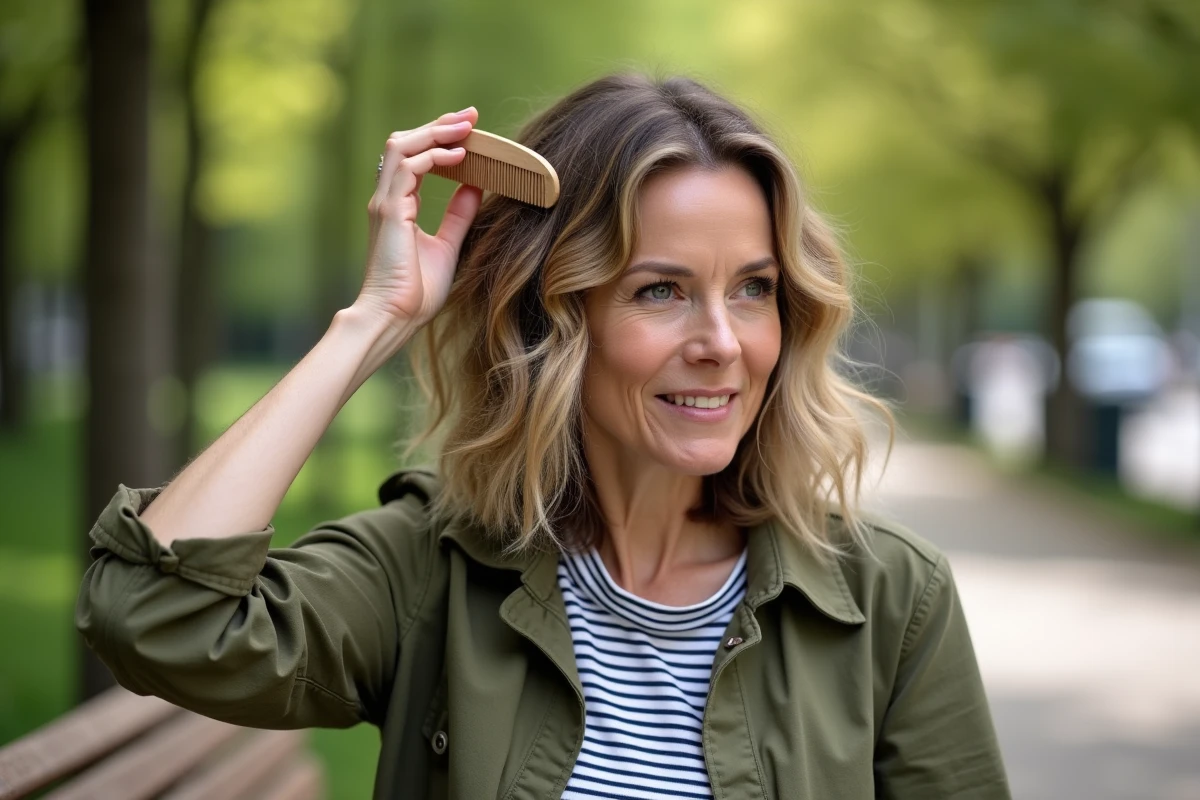
Brushing hair in the evening with a natural bristle brush distributes sebum from the roots to the lengths. This gesture reduces the visible concentration of grease at the scalp and nourishes the ends in the process. Two to three minutes of brushing in the evening changes the appearance by the next morning.
Dry Shampoo: Useful but Not for Daily Use
Dry shampoo absorbs excess sebum at the roots. It is sprayed from about twenty centimeters away, left to sit for a few minutes, and then brushed out. The pitfall: using it for several consecutive days without ever washing. Residues accumulate, clog follicles, and can cause itching. Limiting dry shampoo to one or two uses between washes remains the most reasonable practice.
Other Gestures That Extend Freshness
- Securing hair at night with a fabric hair tie or satin scarf to limit friction and breakage.
- Avoiding touching hair during the day, as the sebum from hands transfers directly to the front strands.
- Rinsing only with lukewarm water (without shampoo) to refresh the scalp on hot days without triggering a full washing cycle.
- Choosing a light leave-in treatment on the lengths to provide hold without weighing down the roots.
Adapting Washing Frequency to Hair Type
Rather than seeking a universal number, it is beneficial to reason by hair profile. Fine, straight hair rarely tolerates more than three days without the greasy appearance becoming bothersome. Curly or wavy hair often lasts four to five days, sometimes more. Coily or very curly hair can go up to a week or more without loss of comfort or hygiene.
The season also plays a role: in summer, sweating accelerates the greasy appearance. In winter, the scalp produces less sebum, and spacing occurs naturally.
The best indicator remains the comfort of the scalp. A scalp that does not itch and does not smell does not need to be washed, regardless of the date of the last shampoo. Applying this simple logic avoids both over-washing (which stimulates sebum production) and under-washing (which promotes residue buildup).