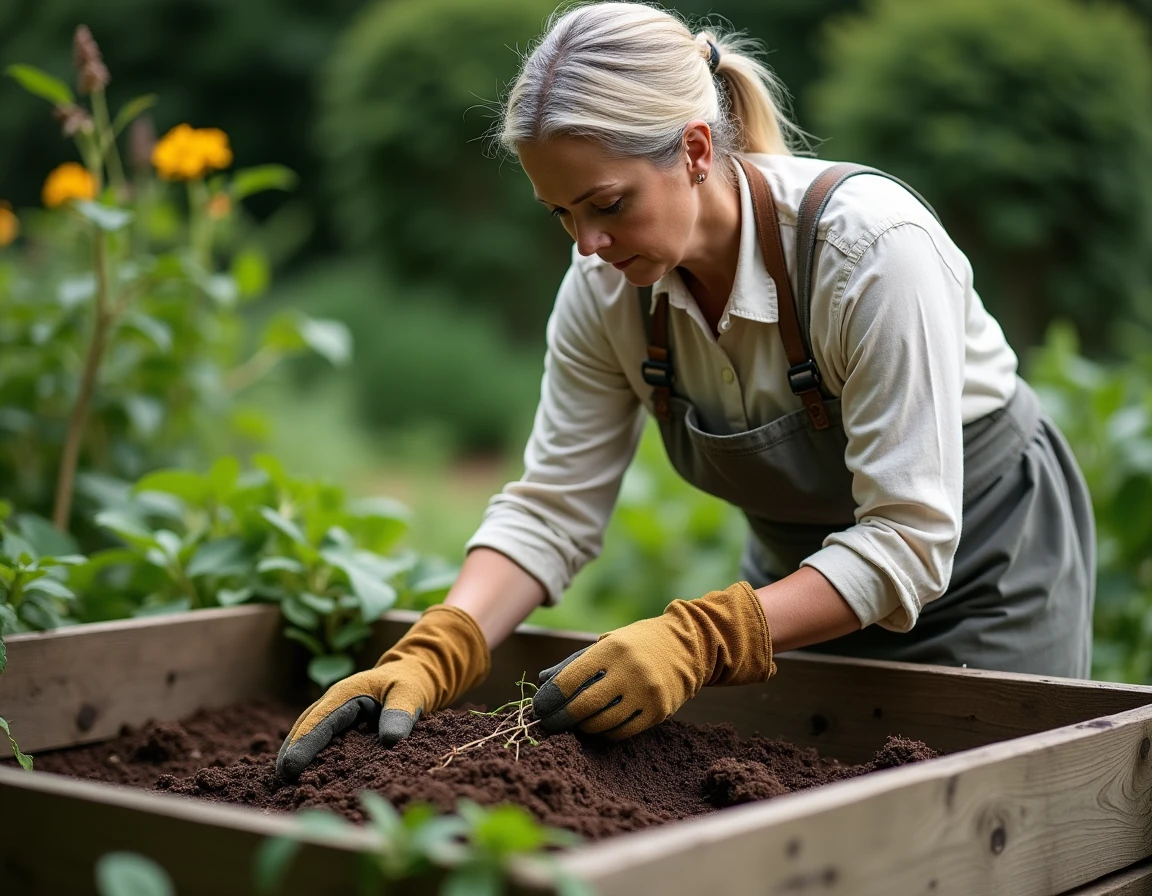
The roots that invade a composter pose a concrete problem: they fragment the decomposing organic matter, disrupt aeration, and complicate mixing. Preventing roots from invading your natural compost requires understanding why they penetrate it, and then acting on the immediate environment of the bin rather than on the roots themselves.
Why Roots Target Compost and Not the Bare Soil Next to It
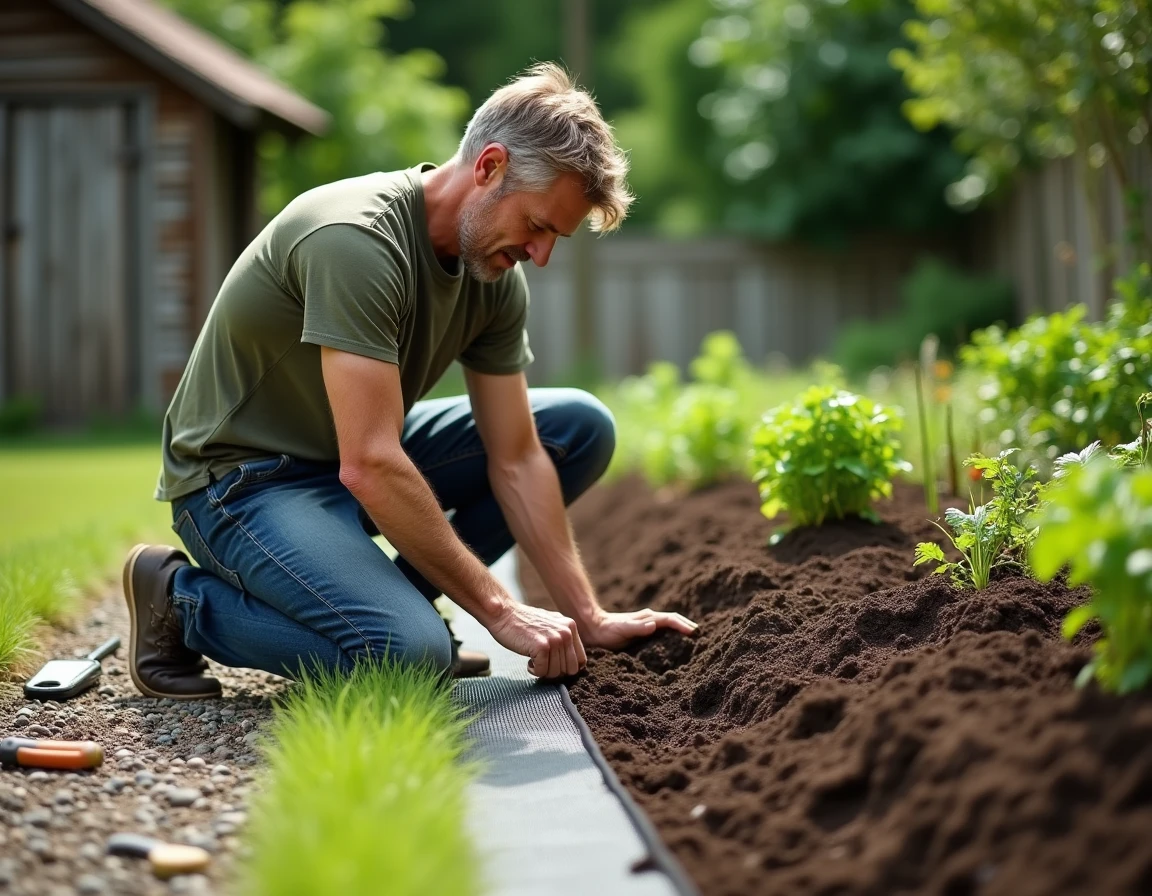
A compost pile in the process of maturation concentrates moisture, heat, and nutrients in a limited volume. For the fine roots of trees and shrubs located several meters away, this environment represents a much more accessible resource than the surrounding mineral soil.
Recent field reports confirm that fine roots often return after soil enrichment. The problem is not solely the proximity of a tree: it is the very structure of the compost, loose and rich, that facilitates colonization. A composter placed directly on the ground, without any separation, offers direct access.
This mechanism explains why simply moving the bin does not always resolve the situation. If the new soil remains close to active roots, the invasion resumes within a few months. To find more information on Info Jardinage, the logic remains the same: it is necessary to cut the physical path between the roots and the organic matter.
Root Barrier Under the Composter: Installation and Limitations
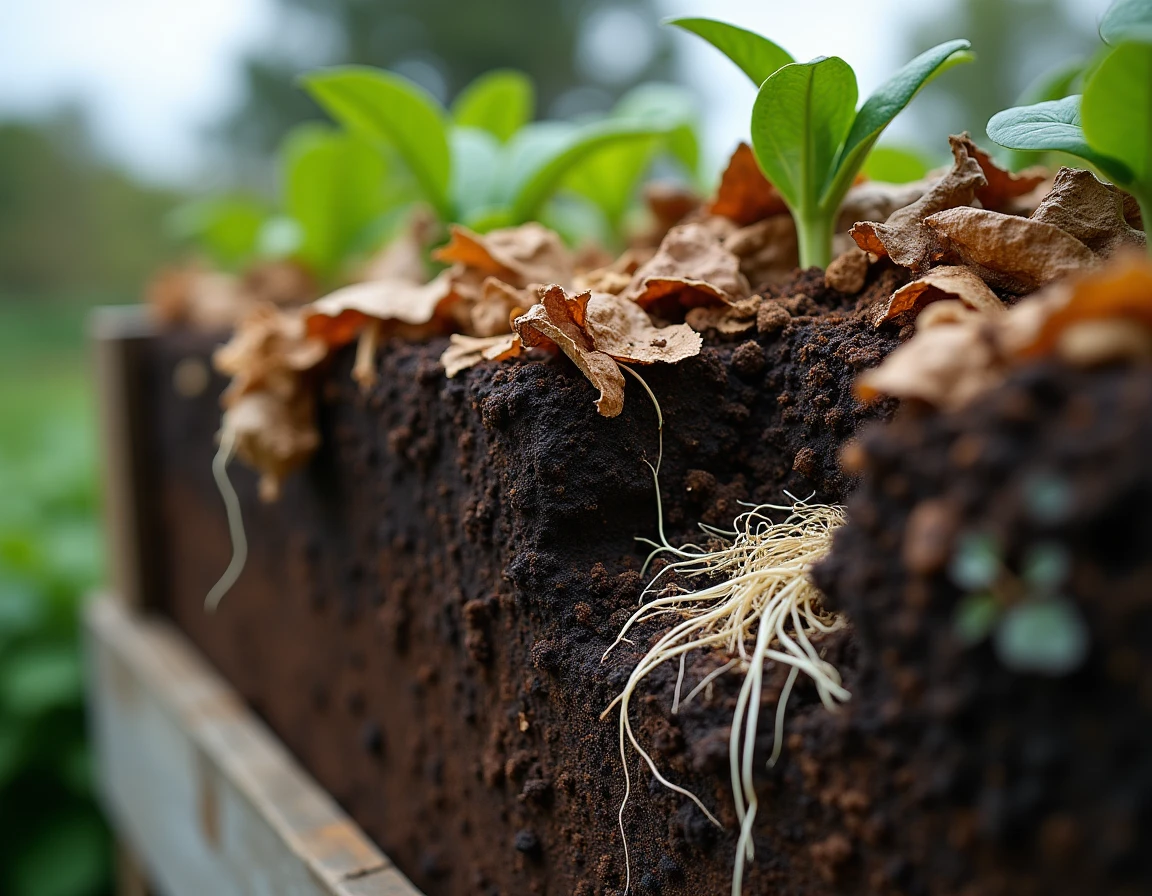
The most sustainable solution for isolating compost from the soil remains the root barrier installed without breaks under the bin. A dense geotextile fabric or thick polyethylene film, deployed under the entire surface of the composter and rising up the sides, blocks the progression of roots from below.
The difficulty lies in the continuity of the installation. Recent technical guides emphasize a specific point: if the barrier has poorly overlapped joints or holes, roots will pass through these openings within a few weeks. An overlap of several centimeters between each panel is the minimum standard.
Constraints to Anticipate
A watertight barrier modifies the drainage of the compost. Excess water no longer infiltrates the soil, which can create waterlogging at the bottom of the pile. Two precautions can compensate for this flaw:
- Drill the barrier with regular micro-perforations, sufficient for drainage but too narrow to allow fine roots to pass
- Slightly elevate the composter on wedges or a pallet to create an air gap between the barrier and the base of the bin
- Check the condition of the fabric twice a year, especially at the corners where friction can create tears
Feedback varies on the effectiveness of this method against very vigorous trees (willows, poplars, black locusts). In these cases, the distance between the tree and the composter is as important as the barrier, as roots can bypass the obstacle at depth.
Preventive Maintenance of Compost Throughout the Seasons
Installing a barrier does not eliminate the need for regular monitoring. Roots are not the only vector of invasion: weed seeds germinate in the compost, and their young roots establish quickly if left to grow.
Pulling up seedlings as soon as they appear in spring remains the most realistic method. Recent sources describe a logic of frequent actions rather than a major annual cleanup. Spending five minutes each week removing visible shoots prevents deep rooting.
Mixing as a Deterrent to Colonization
Regularly turning compost (every two to three weeks during warm periods) mechanically disrupts the roots trying to settle. Mixing cuts the fine roots, exposes them to air, and integrates them into decomposition. In contrast, compost left undisturbed for several months becomes a stable environment that roots easily colonize.
Thick surface mulching limits germination but does not block already established root colonization. Combining mulching, early manual weeding, and a watertight border yields better results than relying on any one of these methods alone.
Composter Location: Distance and Soil Criteria
The choice of location determines half of the problem. Placing the composter too close to a tree or hedge offers a permanent source of roots. The roots of a mature tree can extend well beyond the projection of its crown on the ground.
Three practical criteria guide placement:
- Observe the canopy of the nearest trees and move the composter beyond the area covered by the branches
- Prefer a compact soil (clay, packed earth) over sandy or very loose soil, as roots progress more slowly in dense substrates
- Avoid low-lying areas where moisture stagnates, attracting roots in search of water
On a small plot where the distance from trees is limited, an elevated composter on a slab or pallet with geotextile fabric represents the best compromise. This elevation creates a physical break between the soil and the organic matter, significantly slowing colonization.
Closed or Open Composter: Impact on Root Intrusion
A closed composter (plastic bin with an integrated bottom) offers mechanical protection that an open pile on the ground does not provide. The rigid bottom prevents direct penetration of roots. Some rotating models completely eliminate contact with the soil.
The open pile, more traditional, remains vulnerable at its base. If you prefer composting in a pile for reasons of volume or practicality, the combination of a ground barrier and frequent mixing remains the best defense. A bottomless composter placed directly on the ground is the most favorable scenario for root invasion.
The choice between these two options also depends on the volume of waste produced and the available surface area. A closed bin is suitable for a small urban or suburban garden. An open pile is better suited for larger plots, provided you invest in soil preparation beforehand.
The fight against roots in compost does not have a single solution. Physical barriers, thoughtful placement, regular mixing, and seasonal monitoring form a coherent set. Each measure taken in isolation shows its limits, but their combination significantly reduces the risk.