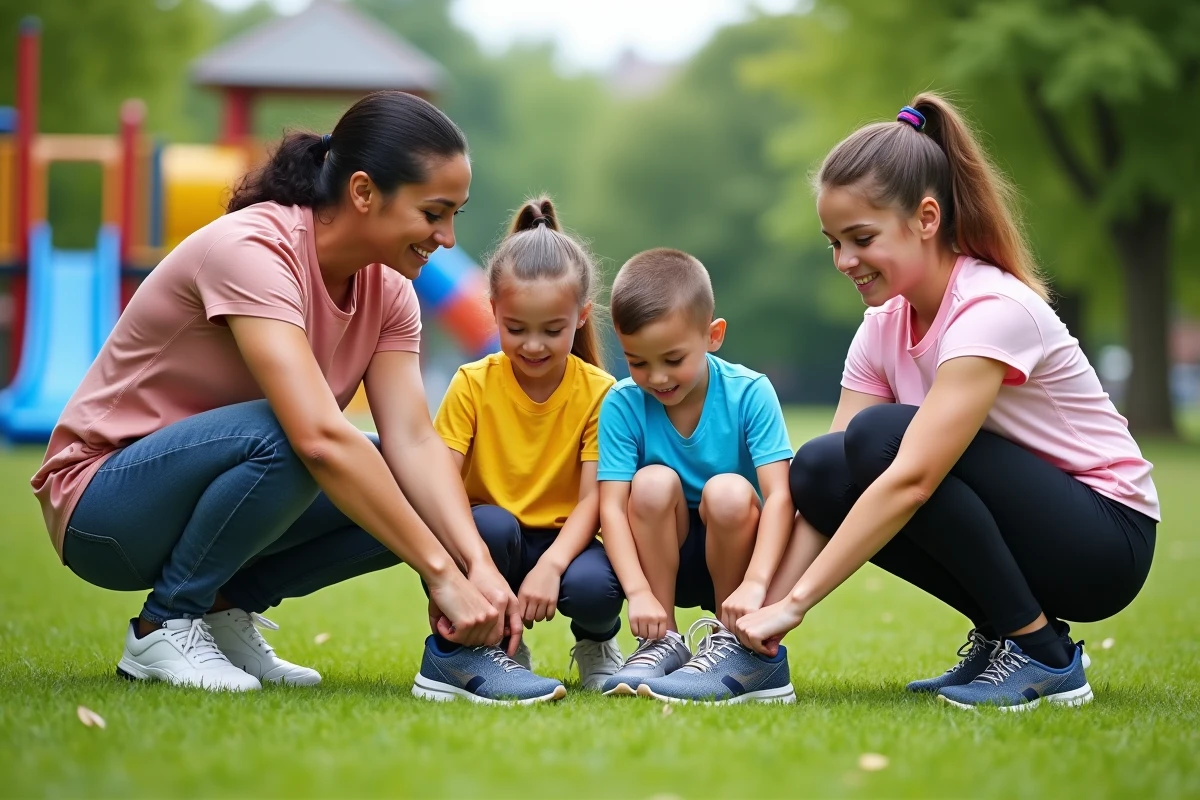
60 minutes. This is the benchmark set by official recommendations for the daily physical activity of children. Yet, half of them do not achieve it. Between the strict regulations of certain team sports and the age or safety restrictions that are barely mentioned, many families move forward hesitantly. It’s hard to navigate when each discipline has its own conditions, sometimes without clear explanations.
Dealing with different temperaments, abilities, and sometimes conflicting desires is like solving a puzzle. Regulatory texts, the needs of the body, individual tastes: everything gets mixed up when it comes to choosing an activity that satisfies everyone. We seek to reconcile genuine pleasure and accessibility, and sometimes the answer lies where we least expect it.
Why family sports change the dynamics of daily life
When we engage in physical activity together, family routines take on a new direction. Family sports do not just fill the schedule: they inject new energy, build strong bonds, sometimes forgotten in the whirlwind of daily life. Everyone gets involved, driven by collective momentum. Performance goals fade away, and shared enjoyment takes precedence. We no longer measure progress; we savor the moment. The experience outweighs the result, and each member feels valued, respected, and encouraged.
Establishing a weekly sports habit shapes family life. These time slots become reference points, bubbles where communication strengthens, and memories are created. Sedentary behavior isolates, while sports bring people together. Offering different forms of activities, flexible and adapted to age or mood, allows everyone to thrive. We transmit much more than a know-how: values of solidarity, self-confidence, a taste for effort—everything is conveyed through action.
In this context, parents become role models. They show the way, embody regularity and perseverance. This involvement inspires children, reassures them, and encourages them to try and persevere. It fosters cooperation, teaches how to manage disappointments, and creates a stimulating and balanced family dynamic, far from any misplaced competition.
To move forward on this path, TicTac Sport, Sports & Health Advice, offers concrete resources and advice to establish a truly accessible family sports practice over time, where commitment is expressed without pressure or performance constraints.
What criteria to find activities that appeal to all ages?
Choosing a sports activity suitable for the whole family requires juggling several parameters. Age, of course, guides the possibilities, but it is not everything. Each person’s personality weighs in, as do specific needs: motor skills, creativity, desire to interact, need to blow off steam or relax. The youngest enjoy discovering their bodies and inventing games, while teenagers often seek to assert themselves, measure themselves, and forge connections. For adults, the aim is sometimes to achieve physical balance, a moment of relaxation, or simply to maintain fitness.
For family dynamics to work, flexibility is essential. Intergenerational practice benefits from evolving and testing different formats. An activity that develops balance or spatial awareness often appeals to younger ones and challenges the older ones. Sports that bring people together, such as hiking, cycling, ball games, swimming sessions, or yoga, allow everyone the opportunity to express themselves.
Alternating activities plays a key role in maintaining interest. We switch between individual and collective practices, always considering the pace and limits of each participant. Sports clubs, for their part, open their doors to sessions designed for all ages, which facilitates inclusion and strengthens the family team spirit. Observing each other, adjusting based on reactions, and considering the pleasure felt: this is how practice becomes sustainable and how everyone finds their place.
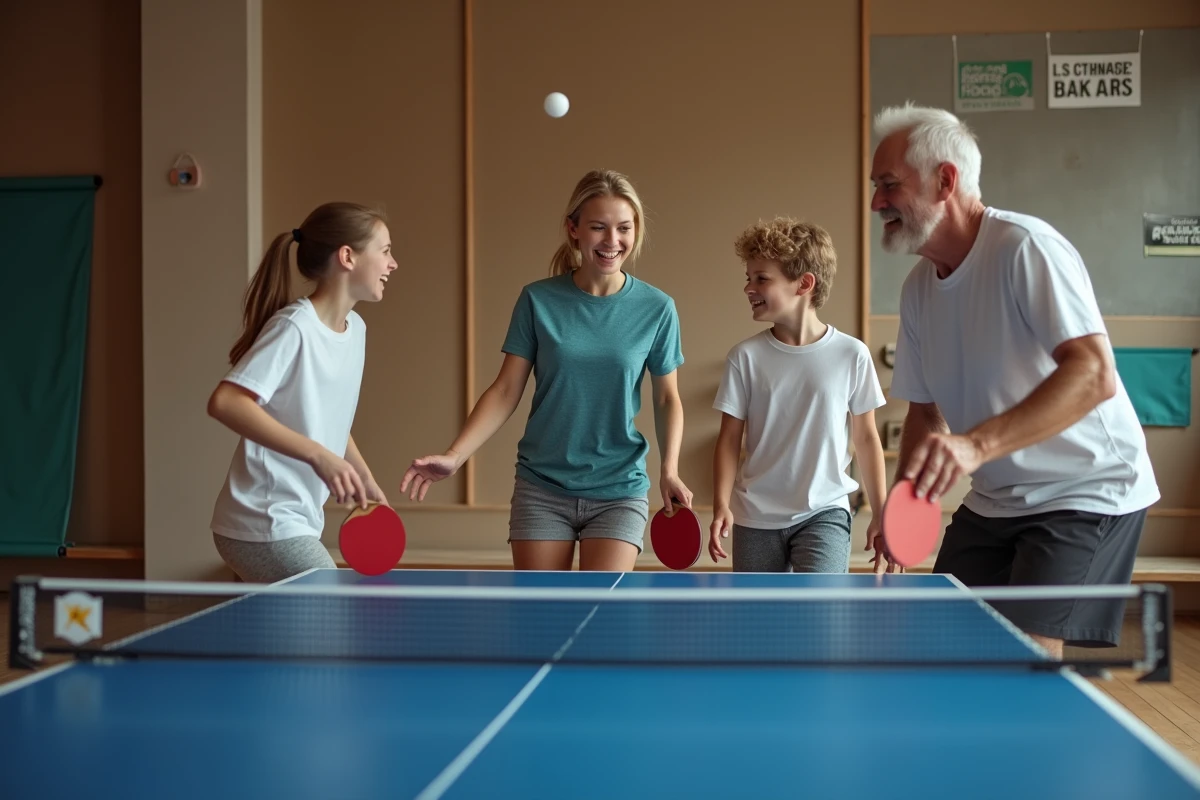
Concrete ideas for sharing memorable sports moments together
There are countless ways to move together as a family, without routine or boredom. Biking, forest walks, or frisbee games in the park provide opportunities to be outdoors, laugh, and expend energy. For the youngest, improvising a dance session or organizing a gymnastics course at home is enough to awaken motor skills and coordination, all in good spirits.
If you want to experience adventure together, tree climbing or orienteering courses are perfect for developing teamwork and trust. From a young age, swimming, whether in sessions with babies or shared swims, boosts confidence and camaraderie. And nothing prevents enjoying an impromptu football or basketball match in the garden: here, cooperation prevails over competition.
Here are some activities that are truly popular with families:
- Yoga or fitness together, to learn to listen to one’s body, refocus, and regain a sense of collective calm.
- Participating in local sports events, such as races or family relays, or trying out activities during vacations, to multiply experiences and strengthen perseverance.
- Setting up a trampoline or organizing ball games: a simple and joyful way to develop agility and the pleasure of moving, without pressure.
Changing regularly, testing, bouncing back on each person’s desires: this is often where the magic happens. These shared experiences shape the family team spirit, leave lasting memories, and convey, without words, the joy of moving forward together. The field is not just a play area: it is a place where the family reinvents itself, hand in hand, with each new activity.