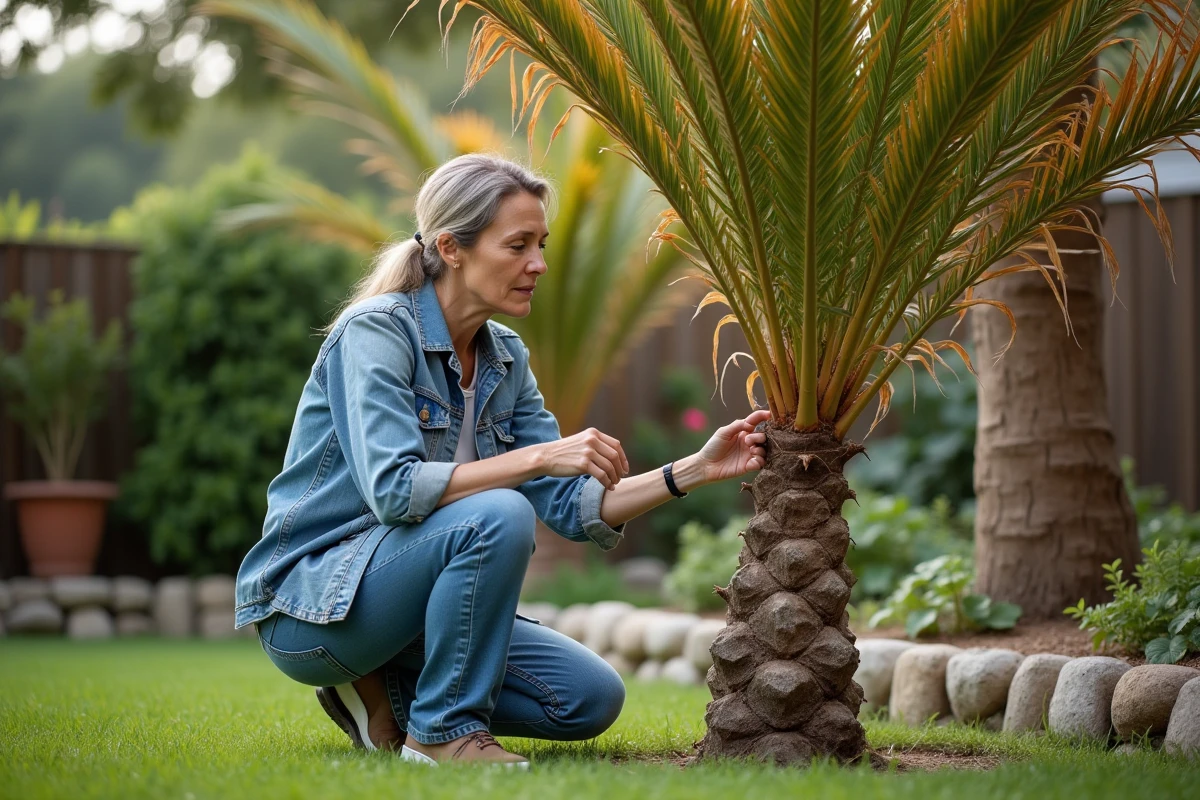
The growth of a palm tree can stop for several weeks without indicating its death. A brown central stem does not guarantee an irreversible state, while still green leaves do not always mean a healthy plant. Some palms seem to wither, then restart after a period of dormancy.
Deceptive external signs complicate the diagnosis. The causes of weakening vary according to species, climate, and care practices. Ignoring a detail like substrate moisture or the presence of pests often delays the necessary intervention. Regular observation facilitates early detection of problems.
Recognizing the signs of an unhealthy palm tree: what your plant is trying to tell you
A suffering palm tree does not go unnoticed by those who know how to look. The appearance of yellow, brown, sometimes twisted leaves, fronds that become brittle, or a trunk that loses its firmness all tell the story of a struggling plant. When new leaves refuse to appear at the core, it indicates that a deep imbalance has taken root. On the stipe, watch for the slightest cracks, sawdust, or a few discreet holes: these clues often reveal the presence of pests or internal infections. A soft trunk, a smell of fermentation, or worrying seepage sometimes indicate damage that is difficult to reverse.
The crown, often neglected, deserves special attention. If it droops and loses its vigor, there is reason to worry. The roots also speak: when they are rotten, dry, or bare, it is a sign of poor adaptation to the soil or inadequate watering. The central spear, this vital point, should resist slight pulling; if it detaches effortlessly, the center of the palm is likely lost.
Here are the symptoms to watch closely to miss nothing:
- Yellow, brown, deformed leaves
- Absence of young shoots
- Soft, cracked, or holed trunk
- Unpleasant odor, seepage
- Dry or rotten roots
To deepen the diagnosis and accurately recognize a dead palm tree, refer to the resource “How to know if your palm tree is dead or dying? – Gardening Advice”. Every detail counts: only a careful eye distinguishes a dormant palm from a plant that is definitively doomed.
Why is my palm tree declining? Common causes not to underestimate
A weakening palm tree is not a victim of chance. The causes are shared between difficult conditions, unwanted pests, and insidious diseases. For example, overly compact or poorly drained soil exposes the plant to root rot: too much water, suffocated roots, fungi settling in. Conversely, neglected watering leads to drying out and water stress, which can be spotted by wilted leaves or withered roots.
Some pests, on the other hand, offer no respite. The red weevil, dreaded by owners of Phoenix canariensis, burrows galleries in the stipe, leaving behind sawdust, holes, and an uninviting odor. The palm moth Paysandisia archon spares neither Phoenix nor Chamaerops or Trachycarpus: it perforates the fronds and weakens the plant, sometimes causing it to decline within weeks. Indoors, spider mites discreetly settle under the fronds, weave their webs, and dull the foliage.
On the disease front, heart rot attacks the vital center of the palm: leaves stuck together, abnormal young shoots, browning of the heart. Vascular wilt blocks sap circulation, causing rapid and irregular yellowing. Other fungi leave brown or gray spots, while bacterial or fungal rots soften the heart or deform the trunk.
The climate also plays its role: cold, frost, sunburn, or lack of light put the crown to the test, slowing growth, sometimes stopping it altogether. Even soil with an unbalanced pH can hinder nutrient absorption and weaken the plant.

What to do if your palm tree seems doomed: useful actions and when to seek a specialist’s advice
When warning signs accumulate—yellowing leaves, a softening trunk, an inert heart—it is essential to act quickly, but without haste. Start by checking the moisture of the soil. An excess of water promotes rot, while a lack condemns the roots to dryness. For a potted palm, ensure that drainage is functioning and remove any standing water. In the ground, inspect the roots and look for any signs of rot or dryness.
Continue by pruning dead or severely damaged fronds: this limits the spread of diseases and gives the plant some air. If you spot brown or black spots on the leaves, or if the heart shows suspicious signs, apply an appropriate fungicide. In the case of an attack by the red weevil or palm moth, the use of nematodes is necessary, and the installation of pheromone traps allows monitoring of the pest population.
To restore strength to a weakened palm tree, an NPK fertilizer, especially in spring, can stimulate growth. If cold threatens, consider using frost protection fabric or heating cables to protect the plant. Finally, if doubts persist or if the heart of the palm appears affected, do not hesitate to consult an arborist, gardener, or nursery specialist. Their experience and tools often make the difference. The Horticultural Society of Moselle also offers specialized advice to support your choices.
A distressed palm tree is not necessarily lost. But time is of the essence: every action counts, every observed detail can change the fate of your plant. In the garden, vigilance often makes the difference between rebirth and silent disappearance.