
A suspended registration blocks all transactions involving the vehicle in the Vehicle Registration System (SIV): sale, change of registered owner, and issuance of a duplicate. The nature of the block—whether related to the vehicle itself or to an administrative or judicial decision—determines the entire process for resolving it. Confusing the two means taking unnecessary steps that can sometimes be costly.
Technical suspension related to the vehicle and administrative opposition: two distinct regimes
The SIV may block a vehicle registration document for reasons related to the vehicle’s physical condition. A failed roadworthiness test, a VGE (Seriously Damaged Vehicle) procedure initiated after an accident, or a compliance issue reported by the DREAL all fall under this first regime. The vehicle is then considered unfit for road use until the non-compliance or damage has been resolved.
Administrative or judicial opposition applies to the registered owner, not the vehicle. It may be imposed in the event of unpaid fines (opposition by the Public Treasury), a court decision (criminal seizure, confiscation), or a report by law enforcement following a traffic offense. In this case, even a vehicle in perfect mechanical condition remains blocked in the SIV.
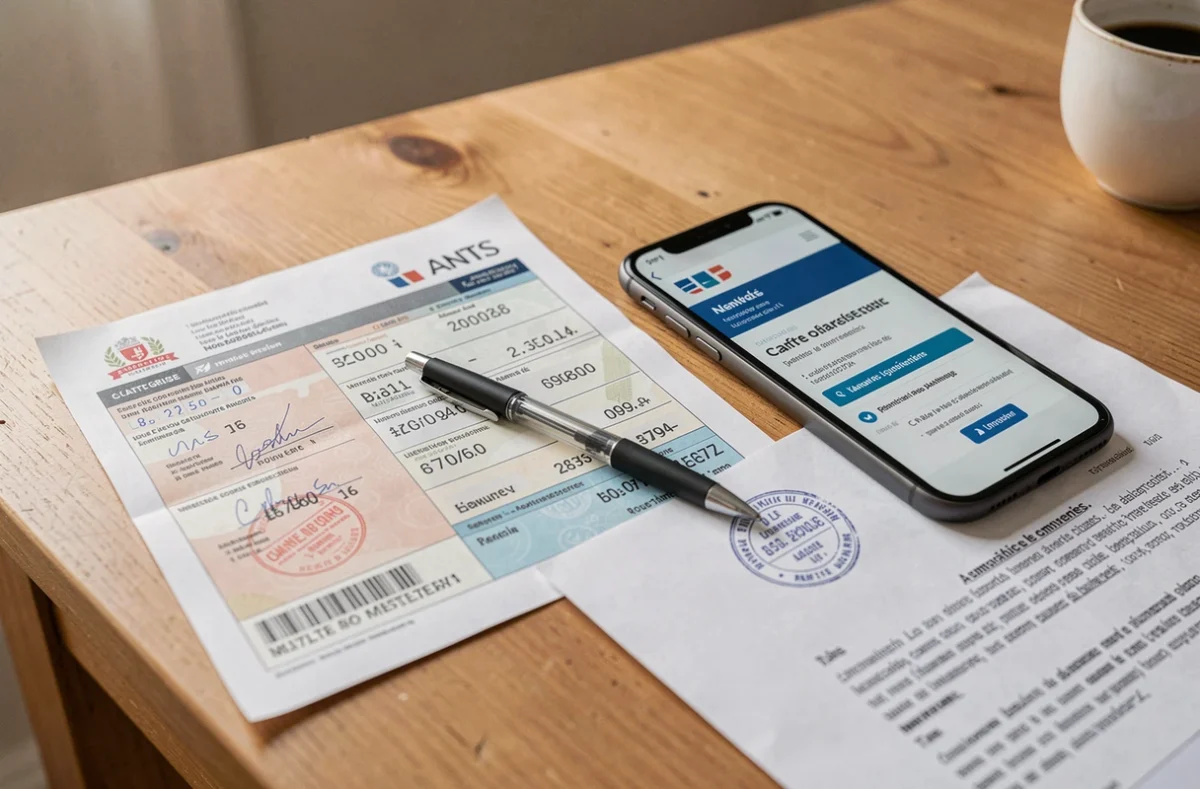
The distinction can be seen directly on the SIV information report, available through ANTS or an authorized professional. The opposition code identifies the requesting authority: DGFIP for the Public Treasury, the public prosecutor’s office or a court for a judicial decision, and the prefecture for an administrative immobilization. On the Enchères Voitures website, this difference between a technical block and an opposition is explained in detail, along with its consequences for reselling the vehicle.

Common causes of registration suspension and their SIV codes
Not all suspensions are the same. Identifying the exact cause speeds up the process and avoids repeated trips to ANTS.
- Objection to the transfer of the vehicle registration certificate (OTCI): imposed by the Public Treasury for unpaid fines. Until the debt is paid or a payment plan is approved, the registered owner cannot be changed.
- Administrative immobilization following a serious offense: driving under the influence of drugs, repeat drink-driving, or excessive speeding. The prefecture suspends the use of the vehicle registration certificate by order.
- VGE procedure: following an accident, the insurer declares the vehicle an economic total loss or seriously damaged. Registration is suspended until an approved automotive expert inspects the vehicle and confirms that it has been restored to compliance.
- Criminal seizure: a judge orders the vehicle seized as part of an investigation. The block can only be lifted by a court decision.
The administrative status report (formerly the certificate of no liens), which can be downloaded from the ANTS website, specifies the type of opposition in effect. A vehicle may be subject to several blocks at the same time.
Steps to resolve a suspension, depending on its type
Lifting an opposition by the Public Treasury
The registered owner must pay all the relevant fines or obtain a payment plan approved by the DGFIP. Once the payment has been recorded, the opposition is lifted and the update is sent to the SIV within a few business days. No action with ANTS is required: the Public Treasury sends the information directly.
In practice, the time between payment and the SIV being updated varies. Keeping proof of payment can help resolve an urgent situation through a prefecture service desk or an authorized professional.
Resolving an administrative immobilization
The vehicle registration certificate must be returned through the prefecture (or sub-prefecture) that issued the order. The registered owner must provide proof that the conditions for the suspension have been met: the prohibition period has ended, the required medical examination has been passed, or the administrative court has issued a favorable decision in the event of a challenge.
Ending a VGE procedure
Only an approved automotive expert can lift a VGE block. After repairs, the vehicle undergoes a second inspection. If the expert confirms that it complies with requirements, they send a favorable report to the SIV. The owner can then request a new roadworthiness test, followed by the reissue of the vehicle registration document if it was confiscated.
A vehicle classified as VEI (Economically Irreparable Vehicle) by the insurer makes things more complicated: an owner who still wishes to repair it must buy the wreck from the insurer before starting the expert assessment process.
Driving with a suspended registration: the real risks
Driving a vehicle with a suspended registration can result in the immediate immobilization of the vehicle during a roadside check. Law enforcement officers consult the SIV in real time. The offense is classified differently depending on the reason for the block.
In the event of a judicial opposition, driving the vehicle constitutes a criminal offense and may lead to prosecution. For an OTCI related to unpaid fines, impoundment is almost automatic, with storage fees charged to the registered owner.
Insurance does not cover a vehicle whose registration document has been administratively suspended. In the event of an accident, the insurer may declare the policy void and refuse all compensation, including for damage caused to third parties.
Check a vehicle’s registration status before buying
We always recommend requesting the administrative status report before completing a transaction. This free document, generated on the ANTS website, lists any oppositions, liens, or ongoing VGE procedures.
A seller who cannot provide this report or refuses to share it is a red flag. Buyers can also check for themselves by entering the registration number on the Ministry of the Interior’s Histovec platform, which provides access to the vehicle’s administrative history.
Resolving a suspended registration starts with identifying the authority responsible for the block. Each type of suspension has its own point of contact and procedure. Contacting the wrong department only delays getting the vehicle back on the road.