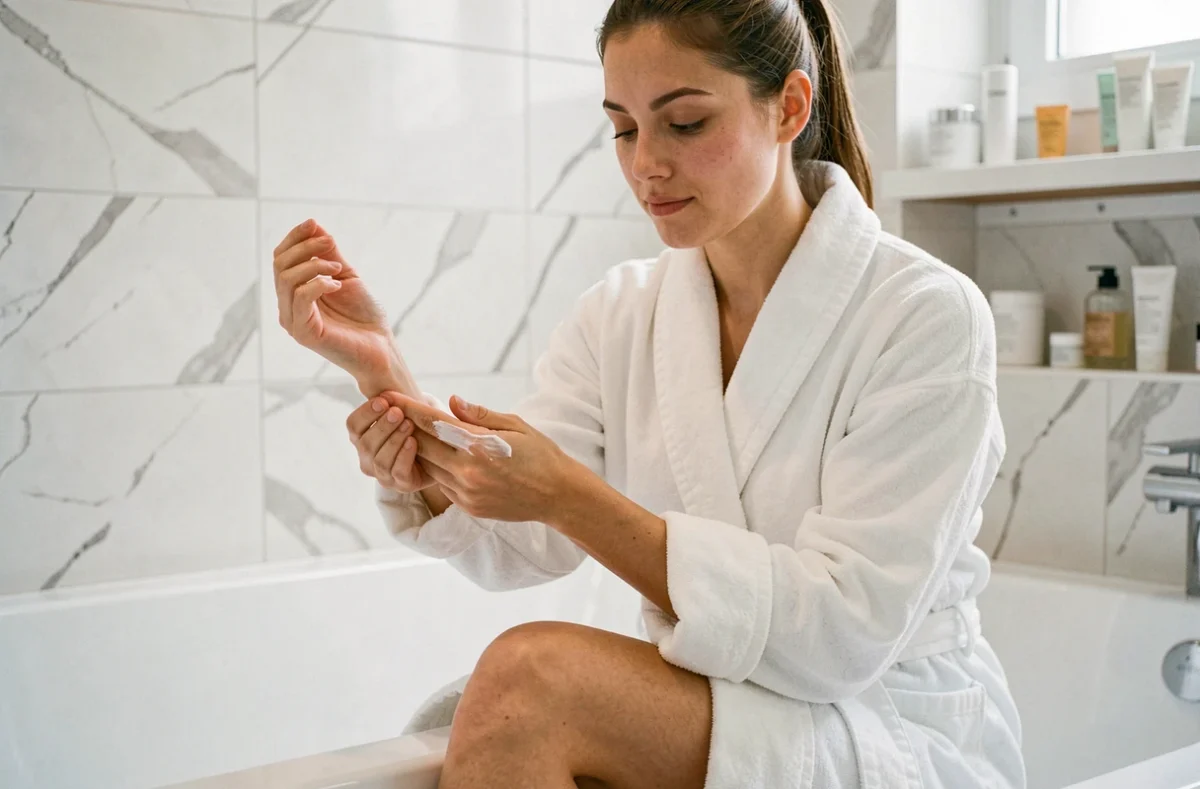
Intimate hair removal is based on a simple principle: removing or destroying hair at different stages of its growth cycle. Each technique targets a specific part of the hair structure (shaft, root or bulb), which determines how long the results last and what side effects may occur. Going from hairy to smooth pubic skin means choosing a method suited to your skin tone, the sensitivity of the area and how long you want the results to last.
The hair growth cycle and the pubic area: why regrowth varies
Pubic hair goes through three phases: anagen (active growth), catagen (regression) and telogen (rest, followed by shedding). Only hairs in the anagen phase respond fully to techniques that target the bulb, such as laser hair removal or electrolysis.
In the pubic area, a smaller proportion of hairs are in the anagen phase at any given time than on the legs. Regrowth therefore seems uneven, and the intervals between sessions vary depending on the method chosen. This difference in growth cycles also explains why no technique removes all hair in a single session.
Follicle density and the thickness of pubic hair make this area more prone to irritation and ingrown hairs than other parts of the body. Your choice of technique should take this anatomical reality into account.
Pubic shaving: quick, with well-known limitations
A razor cuts the hair shaft at skin level without touching the root. The results are immediate, but regrowth can be felt within one to three days, with a rough sensation caused by the blade leaving a sharp edge on the cut hair shaft.
A few simple steps can help you achieve smooth pubic skin while limiting irritation in this delicate area:
- Soften the hair under warm water for several minutes before you start. Water makes the hair shaft thicker and more pliable, reducing resistance as the blade passes over it.
- Apply shaving gel or foam, then shave in the direction of hair growth while gently stretching the skin. Avoid going over the same area several times.
- Rinse with a mild soap and apply a moisturiser or talcum powder to soothe the skin and reduce friction in the hours that follow.
Shaving is still the least long-lasting method. It suits people who are happy to maintain the results frequently or want a temporary solution without a significant investment. Going from hairy to smooth pubic skin with a razor therefore requires a level of regular upkeep that other methods can reduce.
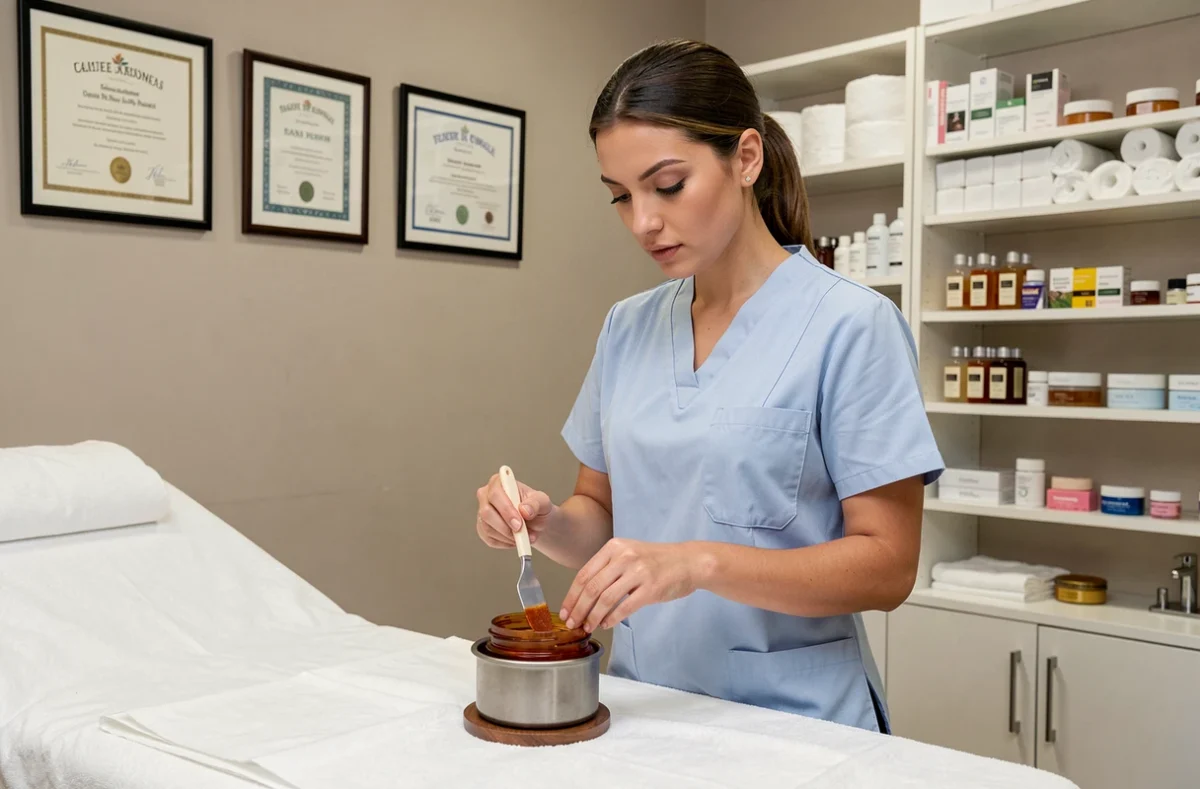
Waxing and sugaring for the bikini area: removing hair from the root
Waxing (hot, warm or cold) and sugaring work on the same principle: the hair is pulled out with its bulb, delaying regrowth for several weeks. Hot wax opens the pores and makes extraction easier, while cold wax or ready-to-use strips pull more firmly on the skin.
Sugar paste (a mixture of sugar, lemon and water) has an advantage in the intimate area: it sticks more to the hair than to the skin, reducing the risk of skin being pulled away. It is applied warm, which limits the risk of burns.
Ingrown hairs after waxing
Pulling out the hair can weaken the follicle. As it grows back, the new hair may curve beneath the skin instead of piercing the epidermis. On the pubic area, where underwear causes friction, ingrown hairs are more common than on other parts of the body. Gentle exfoliation two to three times a week between sessions can help release hairs before they become trapped under the skin.
Laser hair removal for the bikini area: what the light actually targets
The laser emits a wavelength absorbed by the melanin in the hair. The light energy turns into heat at the bulb, damaging the cells responsible for regrowth. Several sessions are needed because only hairs in the anagen phase absorb enough light for the treatment to be effective.
Laser hair removal does not guarantee permanently hair-free skin. It reduces hair growth over the long term, but maintenance sessions may be useful at longer intervals. Very light or red hair, which contains little melanin, responds much less effectively to treatment.
Skin tone and choosing a laser
The type of laser used depends on skin tone. Alexandrite is considered particularly suitable for fair skin, while Nd:YAG is better suited to medium or dark skin because it penetrates more deeply without targeting as much of the epidermis’s melanin.
A tan, taking photosensitising medication or having an active skin lesion in the area are all reasons to postpone a session. Laser treatment timing depends on the skin’s actual condition, not a fixed schedule.

Hair removal cream and electric epilator: intermediate alternatives
Hair removal cream dissolves the keratin in the hair shaft through a chemical reaction. The results last about as long as shaving, but regrowth feels slightly less rough because the hair shaft is not cut at an angle. The risk of chemical irritation is higher in the pubic area, so it is best to test the cream on a small patch of skin before applying it more widely.
An electric epilator pulls hair out from the root using rotating tweezers. It can be painful on the pubic area, where nerve endings are dense. Regrowth is similar to that after waxing, but using the device takes patience to minimise hair breakage and tiny skin injuries.
Choosing an intimate hair removal method: what matters
Your choice comes down to three main factors: how long you want the results to last, your pain tolerance and your skin tone. A razor offers an immediate, painless but short-lived solution. Waxing or sugaring keeps the area smooth for a few weeks. Laser hair removal reduces hair growth over the long term, provided the hair is sufficiently pigmented.
Any active irritation or infection is a reason to postpone hair removal, whatever the method. Treat the skin first, wait until it has returned to normal, then resume your sessions. This sequence helps prevent an existing case of folliculitis or a fungal infection from getting worse.
Long-lasting smooth skin rarely comes from using just one method. Maintaining the results with a razor between waxing sessions, or alternating laser treatment with an electric epilator for any remaining hairs, lets you adapt your routine to actual regrowth rather than a theoretical schedule.