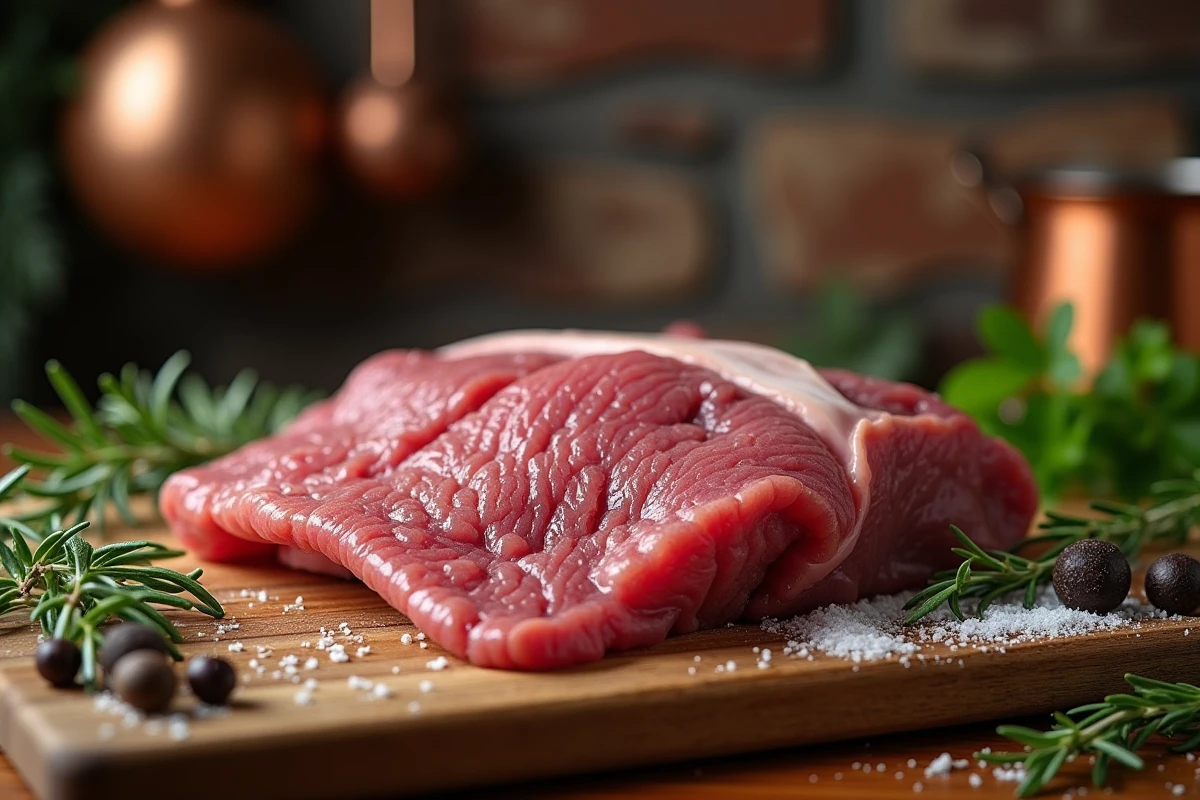
The beef tongue remains an underutilized cut of rump steak by most amateur cooks. Located in the lower part of the rump steak, this fine and marbled piece gets its name from its elongated shape. Its richness in hydrolysable collagen gives it remarkable tenderness after long cooking, which clearly distinguishes it from other offals or cuts known for being fibrous.
Collagen and slow cooking: what makes the tongue so tender
The collagen present in the beef tongue transforms into gelatin under prolonged moist heat. This process, called hydrolysis, only truly begins beyond a maintained internal temperature at low intensity for a long time. Insufficient simmering leaves the fibers stiff, while excessive cooking dries out the meat despite the intramuscular fat.
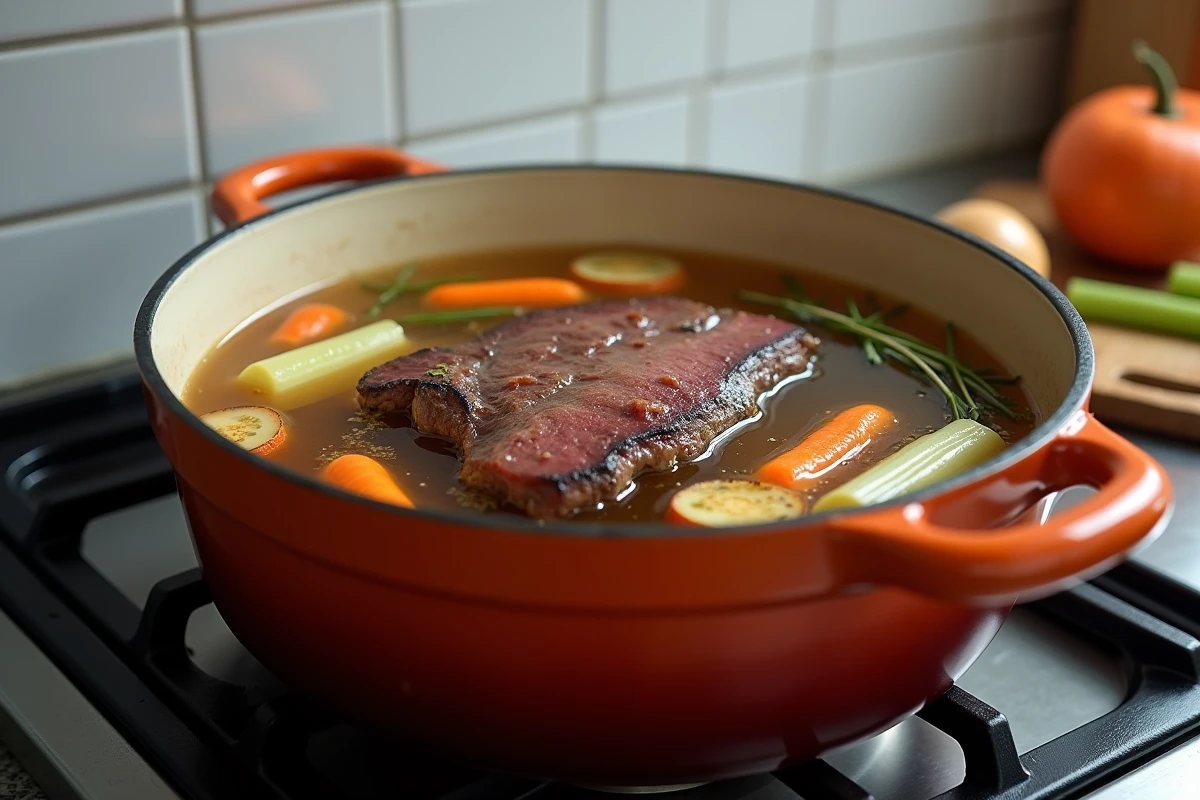
We recommend cooking in a covered oven or Dutch oven, at moderate temperature, over several hours. The hydrolyzed collagen produces a melting texture without the addition of fat. The tongue also lends itself to sous-vide cooking, which stabilizes the temperature and limits juice loss.
For those looking for a detailed homemade beef tongue recipe, a prolonged rinse in cold water before cooking is a step that professional butchers consider non-negotiable. An additional vinegar soak reduces the risk of bacterial contamination while tenderizing the surface fibers.
Beef tongue on a ketogenic diet: adapting the recipe without compromise
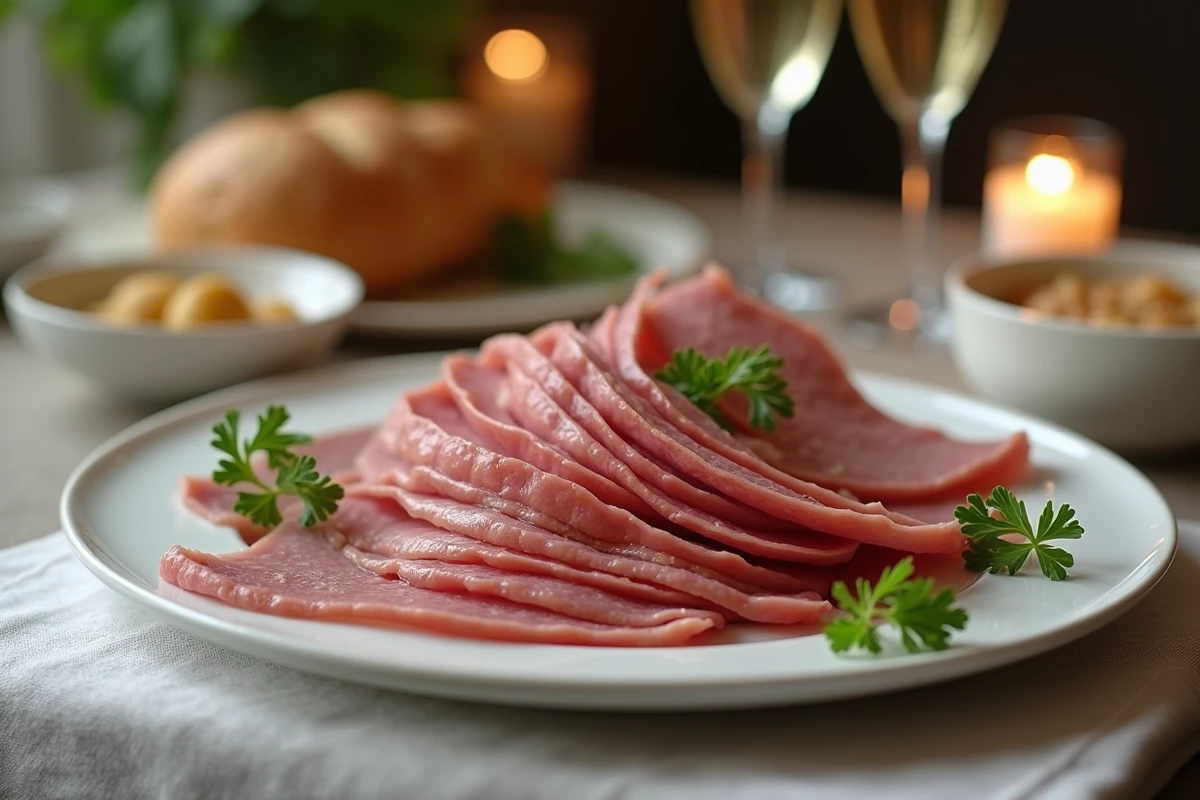
Most traditional recipes for braised beef tongue rely on sauces made from tomatoes, flour, or potatoes. In a low-carb or ketogenic context, these accompaniments should be avoided. The tongue, naturally rich in proteins and lipids, fits perfectly into this type of diet, provided the sauce and garnish are rethought.
Replacing the classic tomato sauce
The traditional spicy sauce uses pickles, tomatoes, and sometimes sugar. For a ketogenic version, we replace the tomato with a reduced veal stock thickened with butter, enhanced with mustard and finely chopped pickles. The concentrated veal stock provides umami without added carbohydrates.
Pickles remain compatible: their carbohydrate content is negligible. The vinegar they contain supports the dish’s acidity, which balances the fat of the cut.
Suitable garnishes
- Cauliflower purée with brown butter, mimicking the texture of mashed potatoes without the carbohydrates
- Sautéed Paris mushrooms with a drizzle of heavy cream and fresh thyme
- Roasted celery root in thick slices, seasoned with olive oil and fleur de sel
The tenderness of the cut is not affected by the change in accompaniment, as it is the cooking method (duration and temperature) that determines the final texture, not the sauce.
Preparing the tongue: the steps that mainstream recipes overlook
The selection of the cut at the butcher determines everything else. We ask for a tongue cut from the lower part of the rump steak, with visible marbling but without excessive external fat. A piece that is too lean will toughen, while a piece that is too fatty will yield an oily juice.
Rinsing and vinegar soaking
Rinse the meat under cold water for several minutes. This rinsing removes blood residues and surface impurities. The subsequent vinegar soak (cold water mixed with white vinegar) acts as a gentle sanitizer. This double step improves both food safety and post-cooking texture.
Drain thoroughly and dry with paper towels before searing the meat. A wet surface prevents the Maillard reaction, which gives the golden crust and grilled aromas.
Searing and deglazing
Sear the tongue in a hot oiled Dutch oven, without moving it, until well browned on each side. Then deglaze with an acidic liquid (dry white wine, apple cider vinegar, or veal stock) to lift the fond. These concentrated drippings form the aromatic base of the dish.
Then add your spices and herbs. The classic bouquet garni (thyme, bay leaf, parsley) works better than complex spice blends on this cut, which needs clarity rather than an overload of flavors.
Labeling and origin: what the new European regulation changes
Since March 2025, regulation (EU) 2025/456 mandates a mandatory mention of the origin and farming method for raw beef tongues sold. This requirement also applies to beef tongue when marketed under this name in butcher shops.
In practice, this means you can now check whether the meat comes from extensive or intensive farming before purchase. Prefer extensive farming for better marbling and a more balanced lipid profile. Artisan butchers, who often work in short supply chains, generally display this information more clearly than large retailers.
The growing interest in offals and lesser-known cuts like the beef tongue is part of a movement to reduce food waste. Using the entire carcass values the farmer’s work and offers cuts at often more accessible prices than noble pieces.
The beef tongue remains a cut that rewards patience. A good rinse, controlled cooking in temperature and duration, and the choice of traceable origin are enough to achieve a dish that classic steaks cannot replace. Transitioning to a ketogenic diet only requires an adjustment of the sauce and garnish, without altering the cooking method itself.