An Eastpak counterfeit bag today reproduces the logo, shape, and even the color of the original model with a precision that can be misleading at first glance. Verifying the authenticity of Eastpak bags requires going beyond a superficial visual inspection to examine precise technical markers, from the weaving of the fabric to the traceability codes integrated into recent models.
QR code and traceable tags on recent Eastpaks
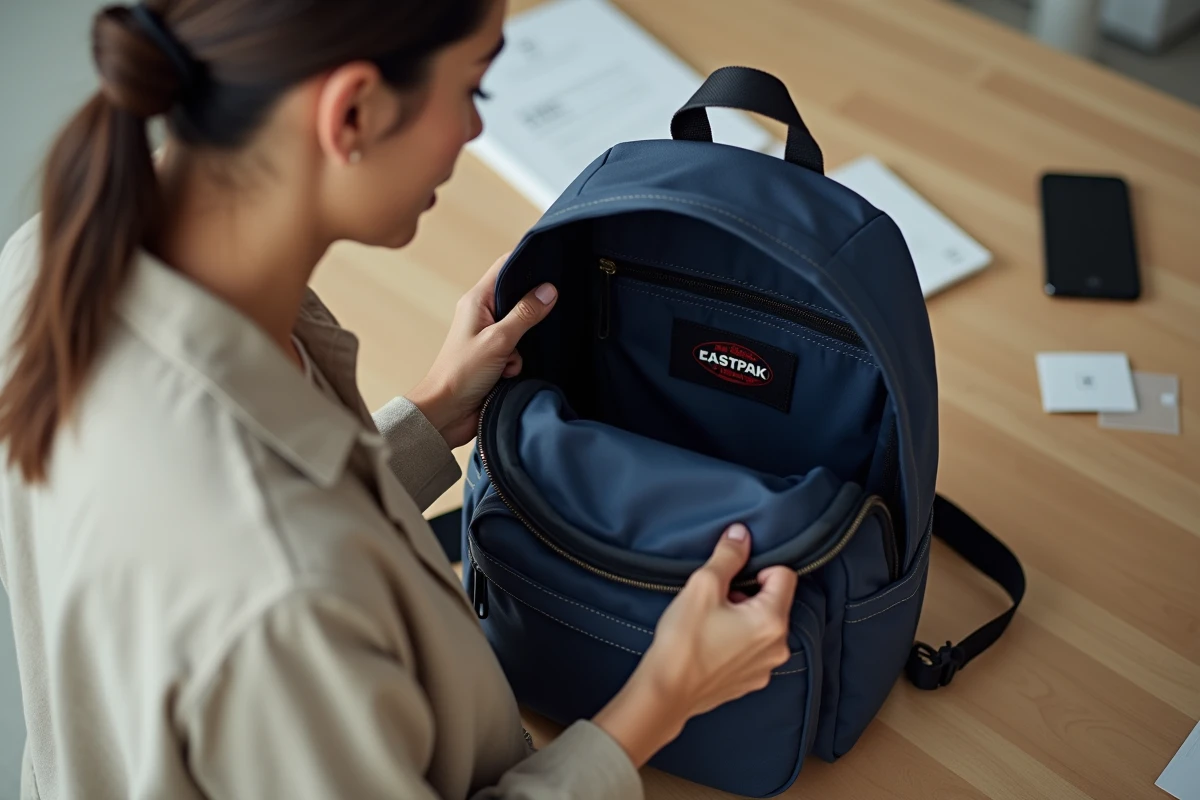
Since the beginning of the 2020s, new models incorporate a QR code or a verification tag sewn directly onto the inner label. This code links to the brand’s or authorized distributor’s website to confirm the model, color, and sometimes the production batch.
A new Eastpak without a readable code, or one whose scan redirects to an inconsistent page (generic domain, error 404, unrelated product page), is a concrete warning sign. We observe that the most carefully crafted counterfeits sometimes reproduce a fake QR code, but the landing page consistently betrays the copy: absence of a product sheet, domain without an SSL certificate, or redirection to a third-party marketplace.
To utilize this criterion, one must verify the authenticity of Eastpak bags by scanning the code with the phone’s native camera, not through a third-party app that could mask the actual destination URL.
Cordura fabric and stitching: the physical markers of an authentic Eastpak
The majority of Eastpak bags use a high-tenacity nylon Cordura fabric. This fabric has a consistent grain, slightly textured, with an abrasion resistance that the low-quality polyester of counterfeits does not replicate. To the touch, the copy feels softer, almost silky, whereas authentic Cordura offers controlled rigidity.
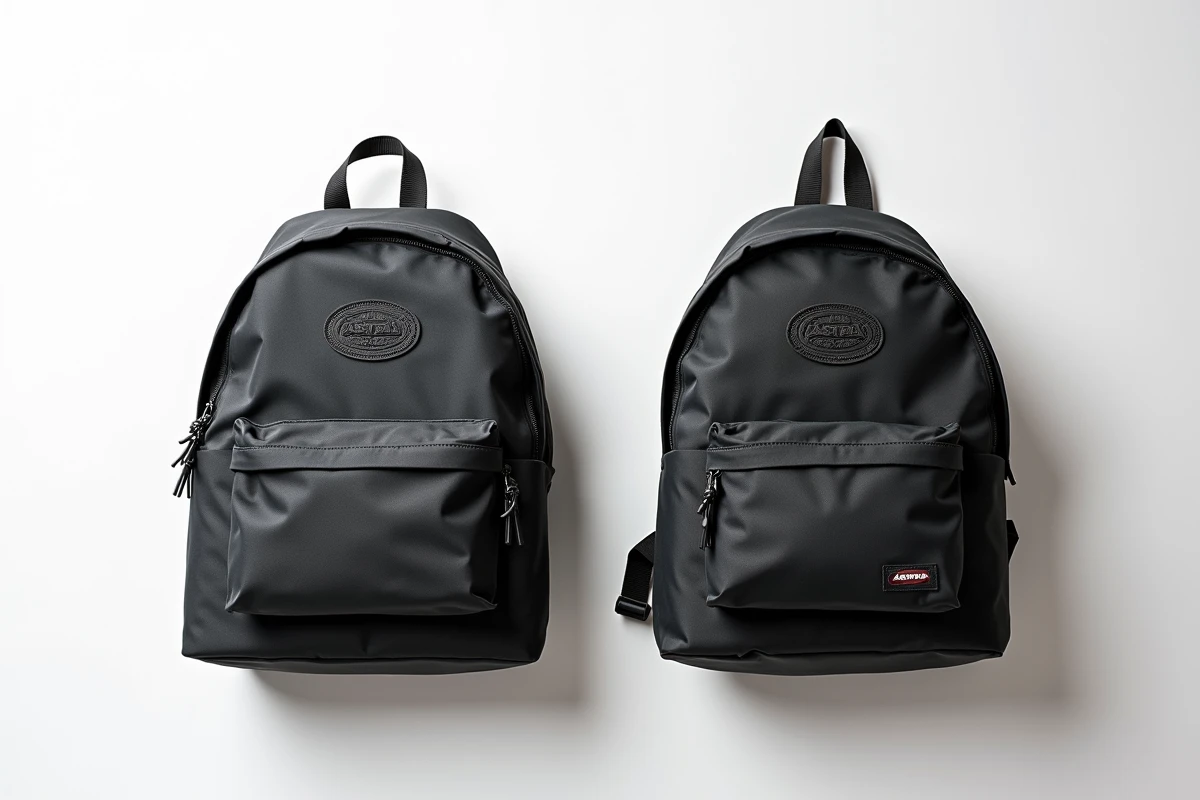
The stitching is the second distinguishing criterion. On an original model, the thread is continuous, evenly tensioned, without visible loops or cut threads. The topstitching follows a regular pitch. On counterfeits, we frequently observe irregularities at the panel junctions, doubled threads in places, and roughly burned finishes at the ends.
Typographic details on the logo and label
The Eastpak logo, whether embroidered or printed, adheres to a specific typography. The letters have consistent spacing, and the arrow of the “E” is sharp and proportionate. On copies, the thickness of the letters varies and the positioning of the arrow is misaligned, sometimes by a few tenths of a millimeter, but enough for a side-by-side comparison with an official visual to reveal the discrepancy.
The inner label mentions the country of manufacture, the model reference, and care instructions. Counterfeits accumulate typographical errors: misaligned characters, slightly different fonts, or even spelling mistakes in the English mentions.
30-year manufacturer warranty: an underutilized verification tool
Authentic Eastpak bags come with a 30-year manufacturer warranty when sourced from the authorized distribution network. This warranty does not cover counterfeits or purchases made outside the official circuit.
This mechanism functions as a double check:
- Verify that the seller’s product sheet explicitly mentions the 30-year warranty and its conditions of application
- If in doubt, contact Eastpak customer service with proof of purchase to confirm that the point of sale is authorized
- Compare the model reference number with the official catalog available on the brand’s website
A seller who refuses to provide a usable invoice for the warranty, or who claims that the warranty “does not apply to resale,” indicates a questionable supply chain.
Sales channels and Eastpak counterfeits: where the risk is concentrated
Eastpak counterfeits primarily circulate on general marketplaces, resale groups on social networks, and certain clearance sites without authorization. The abnormally low price remains an indicator, but high-end copies are sometimes sold at the price of new ones to lend credibility to the offer.
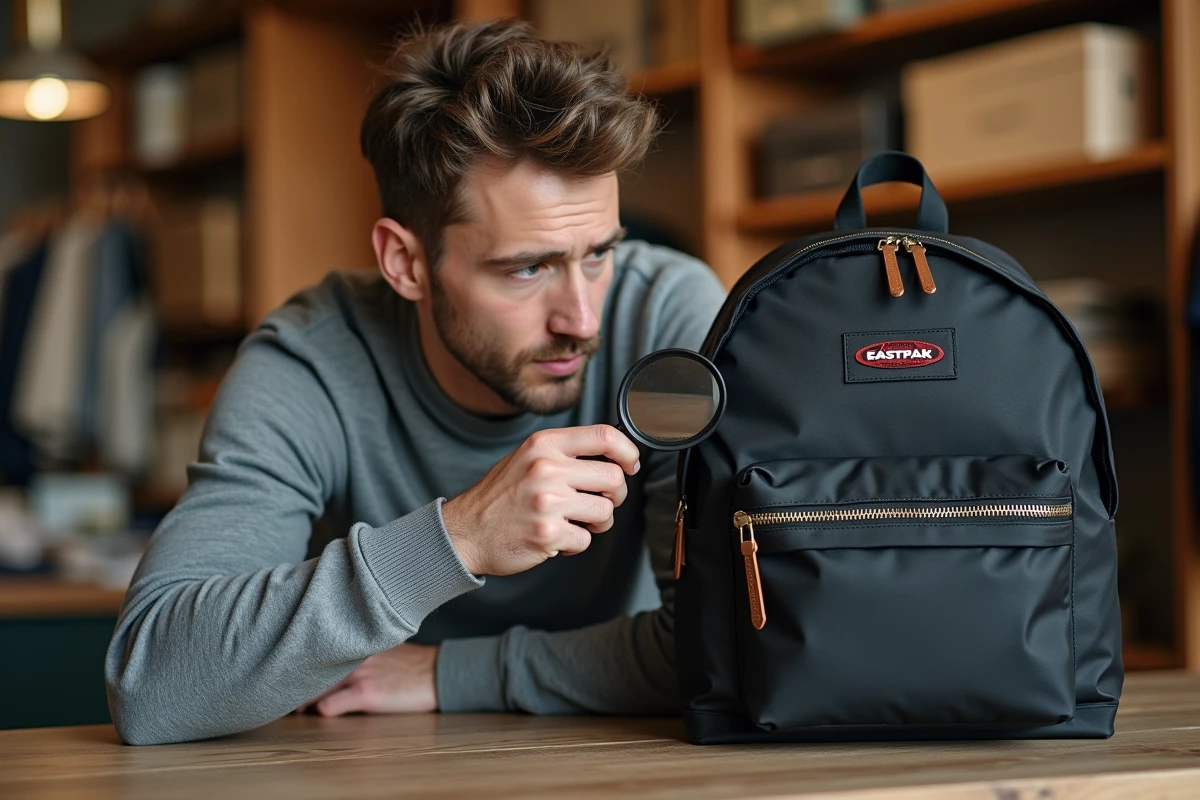
We recommend cross-referencing three elements before any purchase outside an authorized physical store:
- The consistency between the announced product reference and the official visuals of the model (color, shape of closures, logo placement)
- The presence of a verifiable seller history, with reviews and previous transactions
- The possibility of obtaining a photo of the inner label with the complete reference and, for recent models, the QR code
Second-hand purchases: specific points of vigilance
In the second-hand market, the wear of the bag can paradoxically serve as a criterion. Authentic Cordura ages while maintaining its structure, with a slightly patinated appearance but without pilling. Polyester copies quickly show signs of degradation: fraying edges, patchy discoloration, zippers that stick.
The arrow of the embroidered logo withstands wear on an original, while it deforms or frays on a copy after a few months of regular use.
Each Eastpak model has a unique alphanumeric reference that allows it to be found in the brand’s catalog. A bag whose reference does not correspond to any listed model, or whose reference exists but does not match the presented color, confirms the counterfeit. This check takes less than a minute on the official site and remains the most reliable method before finalizing a purchase.